Slow food was introduced in Italy in the 1980’s as a reaction to the trend toward fast food. The thought was that food has important societal values and the trend to fast food was negating the benefits, as well as being unhealthy. Here at Heritage Lane Farm we consider the slow food principles to be an important part of our efforts to educate people on the changes that have come to the food system over the last few decades. One of the important things the U.S. Slow Food organization has done is to establish an Ark of Taste that identifies important food that is being lost with the commercialization of the food system. The Ark of Taste includes a wide variety of fruits and vegetables, livestock, poultry, and prepared foods like bread, cheese and drinks. The items on the Ark of Taste have important historical significance in the U.S. food system and it is just as important to protect as historical buildings and sites.
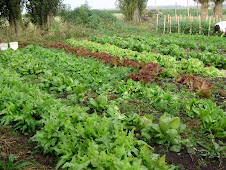
Heritage Lane Farm uses the Ark of Taste as one of the determinations as to whether we have a vegetable or livestock on our farm. Although not everything that we have is on the Ark of Taste, we intentionally have a number of animals and vegetables on the list. From a livestock standpoint, our Navajo-Churro sheep and Mulefoot Pigs are both part of the Ark of Taste. This year we will also have Buckeye and Delaware chickens, as well as Narragansett turkeys, all of which are part of the Ark of Taste. We also have a number of vegetables on the Ark of Taste list including Amish Deer Tongue lettuce, Lima Cisco Bird Egg and Hidatsa Shield dried beans, Green Mountain potatoes, and Cherokee Purple tomatoes.
Our long term strategy of having an outdoor kitchen and commercial kitchen where we can host local chefs and events is also part of the slow food strategy. By being able to experience food within a few feet of where it was raised provides a wonderful opportunity to experience food the way it was meant to be.
To us slow food means more than just eating a local meal. The commercialization of many livestock breeds has meant that many breeds have intentional been genetically bred to grow as quickly as possible on the least amount of high protein food. This has had adverse impact on the temperament of the animals, as well as the taste. Our breeds of livestock grew more slowly and have not been genetically bred for certain traits. Our sheep and pigs will take almost year to reach maturity, instead of 5-7 months like most commercial breeds. Our chickens take 10-12 weeks before we butcher them, instead of 8 weeks for the commercial breeds. To us, slow food is more about how an animal is raised then it is just about the preparation of a meal. We would rather have livestock with a personality then genetics to pack on weight as fast as possible. By the way, if you ever doubt the benefits of slow food, just give our food a try and you will be able to taste the difference.
Thursday, March 11, 2010

Friday, March 5, 2010
Over the past two weeks we have added two sets of twin lambs, the one mentioned last week was born a week ago on Thursday and then we added another set of twins yesterday morning. For some reason, Thursday mornings are the days for twin lambs as all three of our sets of twins were born in the middle of the night on a Thursday, my most busy day of the week. I barely have time to get them situated in the morning before leaving for school and not getting done until after 6pm in the evening. So far we have managed well and outside of some minor issues our 2010 lambing season is a great success.
Sunday, February 28, 2010
Lambing Season


A little over a month ago we added twin Oxfords to our farms, both of which are getting big and getting close to being weaned from their mother. Over the last 10 days we have added 4 Navajo-Churro lambs to our flock. We had two singles and then one of our ewes had twins. So far the 4 lambs are adjusting well and already starting to get big. We have one more Navajo-Churro ewe that should have her lamb in the next week or so and then we have another Navajo-Churro and a Southdown ewe that will not have their lambs until April or May. As usual, all of the lambs are coming in the middle of the night because when I go out in the morning to feed the sheep all the sudden there is a new lamb running around.
The Navajo-Churro that had twins caused some interesting moments for me. It was last Thursday and I have to leave for work early so I was hurrying to get all of the feeding done. I saw the ewe that based on her size I really thought that she would have twins. I fed them and she had one lamb with her and I looked around to see if there was another lamb, but did not see anything (although it was 6am and dark in parts of the barn). I was a little dejected that she only had a single lamb and went on to feed the other sheep and pigs in another part of the barn. While feeding them I heard a baah baah like a lamb was looking for its mother. I went back to the other part of the barn and finally found the twin in the corner. He is a very dark brown, almost black, and in the dark I could not see him. I hurried and separate the ewe and her two lambs into another pen that we had so she could adjust to having twins and I can give her a little more food. I took a few pictures of the twins, but they did not turn out so I will have to try again tomorrow.
Monday, February 15, 2010
2010 Planting
The 2010 planting season is starting early as we already have lettuce, cabbage and spinach starts growing in our living room. In the end we will have about 90 different varieties of vegetables growing over the next 10 months or so. Today we got a couple of hoop houses ready so we can put the lettuce out in a few weeks and then will follow that up with tomatoes, peppers and melons. Our hoop houses are pretty simple, just PVC pipe that is attached to the ground with a 2 foot metal rod that is stuck in the ground(we will put up pictures in a few weeks). We experimented last year with the hoop houses, but they were too long and we had the PVC pipes at 10 foot lengths which was too large of a gap. This year we are doing 25 foot hoop houses and we have PVC pipes every 5 feet to provide more structure. We also glued the PVC pipes together this year so we did not have the pipes coming out like we did last year.
Most of our vegetables come from Baker Creek Heirloom and Seed Saver's Exchange. Both specialize in unique varieties of vegetables. Potatoes we had to get from other sources because the potatoes we got last year were not available this year. We also are getting some corn and soybeans from a couple of Seed Saver members as we wanted a blue corn for flour and neither Baker Creek or Seed Saver's have a blue corn variety available. We will highlight some of the vegetables we grow as we go through the year. It will be an exciting year as we are off to a much early start and we learned a lot last year that we will apply this year.
Most of our vegetables come from Baker Creek Heirloom and Seed Saver's Exchange. Both specialize in unique varieties of vegetables. Potatoes we had to get from other sources because the potatoes we got last year were not available this year. We also are getting some corn and soybeans from a couple of Seed Saver members as we wanted a blue corn for flour and neither Baker Creek or Seed Saver's have a blue corn variety available. We will highlight some of the vegetables we grow as we go through the year. It will be an exciting year as we are off to a much early start and we learned a lot last year that we will apply this year.
Monday, January 25, 2010

The Oxford breed comes from Oxfordshire, England and was developed in the 1830s through the crossing of Hampshires and Cotswolds. The resulting sheep combined the hardiness, muscling and wool quality of the Cotswold with the carcass quality and grazing ability of the Hampshire.
Oxford is the largest of the English “down” breeds, developed for the lush pastures on the hills, or downs, of southern England. They are related to the Southdown sheep that we have in that both are "down" breeds from England. Oxford sheep were imported into North America in the late 1840s.
We got our Oxford ewe from a farm in Gig Harbor, WA a few months ago, but are just now getting around to posting a picture. We unexpectedly had our first lambs of the season on last Thursday with the birth of a ewe and ram. The ram was very small and weak to start with so we have been feeding it ourselves and hoping that it gains strength quickly so it can manage on its own. It is almost like the ram lamb is about a week or two behind in its development when compared to his sister. The lambs are a very cute gray color with very long legs.
The primary reason for getting the Oxford is for our two boys and the fair. The Oxford ewe and the ewe lamb will be their primary show animal in the Northwest Washington Fair in August. The size and conformity will make it tough to beat in the show ring. The Oxfords are very large (we named her Twice My Size), but very easy to work with and not nearly as jumpy as our other sheep.
Friday, December 25, 2009


The origin of the Mulefoot is unclear. The breed is most likely to have descended from the Spanish hogs brought to the Americas beginning in the 1500s. It shares some attributes with the Choctaw hog, and the two breeds likely come from the same ancestral stock, which was loosely selected and managed until the late 1800s. In the early 1900s there were two Mulefoot breed associations and over 200 herds registering purebred stock. As of a few years ago their were less than 200 registered Mulefoots and most Mulefoots can be traced back to the Holliday family in Missouri. A few years ago Arie MacFarland in South Dakota bought the Holliday herd of Mulefoots and has continued the tradition of providing breeding stock and restoring the Mulefoots to their prominence. Arie runs an impressive outfit about 20 miles north of Sioux Falls, SD. She has most of the foundation stocks for Mulefoots and Guinea Hogs in the United States. She manages as many as 200 pigs on her farm of 80 acres. She also meticulously manages the genetics to provide as much diversity as possible. She has done an amazing job.
Last Friday I left to make the 2000 mile drive to Dell Rapids, South Dakota to pick up our new herd of Mulefoots from Arie MacFarland. We purchased 3 mature sows and a junior boar from Arie, as well as 5 young pigs that we will raise for butchering in the summer. Five days later and after many hours on the road I arrived home with the newest addition to our farm. Mulefoot hogs are the only pig on the Slow Food Ark of Taste list because of their origin in the U.S. They do not get as large as the Large Blacks that we already have, but will be a nice complement to the Large Blacks. Whereas the Large Blacks are leaner and longer, the Mulefoots will have a bit more fat and bigger hams.
Mulefoots are unique for a couple of reasons, the first is as their name implies, they have a mule foot instead of a cloven hoof that all other pigs have. Second, as you can see in the pictures, they have longer, thicker hair that in some Mulefoots is fairly straight and in others is more curly. They are taller, fatter, and shorter than the Large Blacks and are jet black in color versus a dull black of the Large Blacks.
Mulefoots have a similar disposition as the Large Blacks, both are very docile and easy to handle. They eat primarily eat grass and hay, with a little grain each day to supplement their diet and the occasional pumpkin. We look forward to introducing this amazing pig to Whatcom County.
The middle picture above provides a nice contrast between the Mulefoots and Large Blacks. The three pigs in the upper right hand corner of the picture our are litter of 3 Large Blacks. The pigs in the left hand side of the picture are the Mulefoot pigs. You can see the noticeable difference in hair and color.
Monday, November 9, 2009

The Oberhasli goat is a dairy breed developed in Switzerland in the mountains around Bern and Freiburg. Oberhasli goats were first came to the United States in the early 1900s. Goats are generally brown, but can range from light tan to deep reddish brown and have black stripes down there back, on their belly, and their face. Oberhasli goats milk is the most similar to cows milk and one of the reasons that we got this breed, on top of the fact that it is about the only real dairy breed on the American Livestock Breeding Conservancy list.
Our goats came from Edelweiss Acres in Olympia, Washington. They use Oberhasli goats primarily has pack goats because of their disposition. We have two females, both of which are pregnant and expecting sometime at the end of February. We will use the milk for our own use, both to drink and to make cheese. We will get a pasteurizer sometime around the time they have their kids. This is not really a money making effort for us, but something that we thought would be fun to try, especially making cheese. We have made cheese before but it is more difficult using store bought milk that has been homogenized.
We currently have our goats with our two Southdown sheep and we got an Oxford sheep that I will talk about in our next post. The 5 animals are still trying to adjust and the Southdown sheep our exhibiting their shyness and keeping their distance from their new pen mates.
Subscribe to:
Posts (Atom)